
21st Century Burning Bushes — Volume IV: End-Times and Wonders — Companion Chapter
This chapter was not included in the published Volume IV, but its message is too important to leave out. Here it is in full, with its illustrations and selected videos.
Introduction
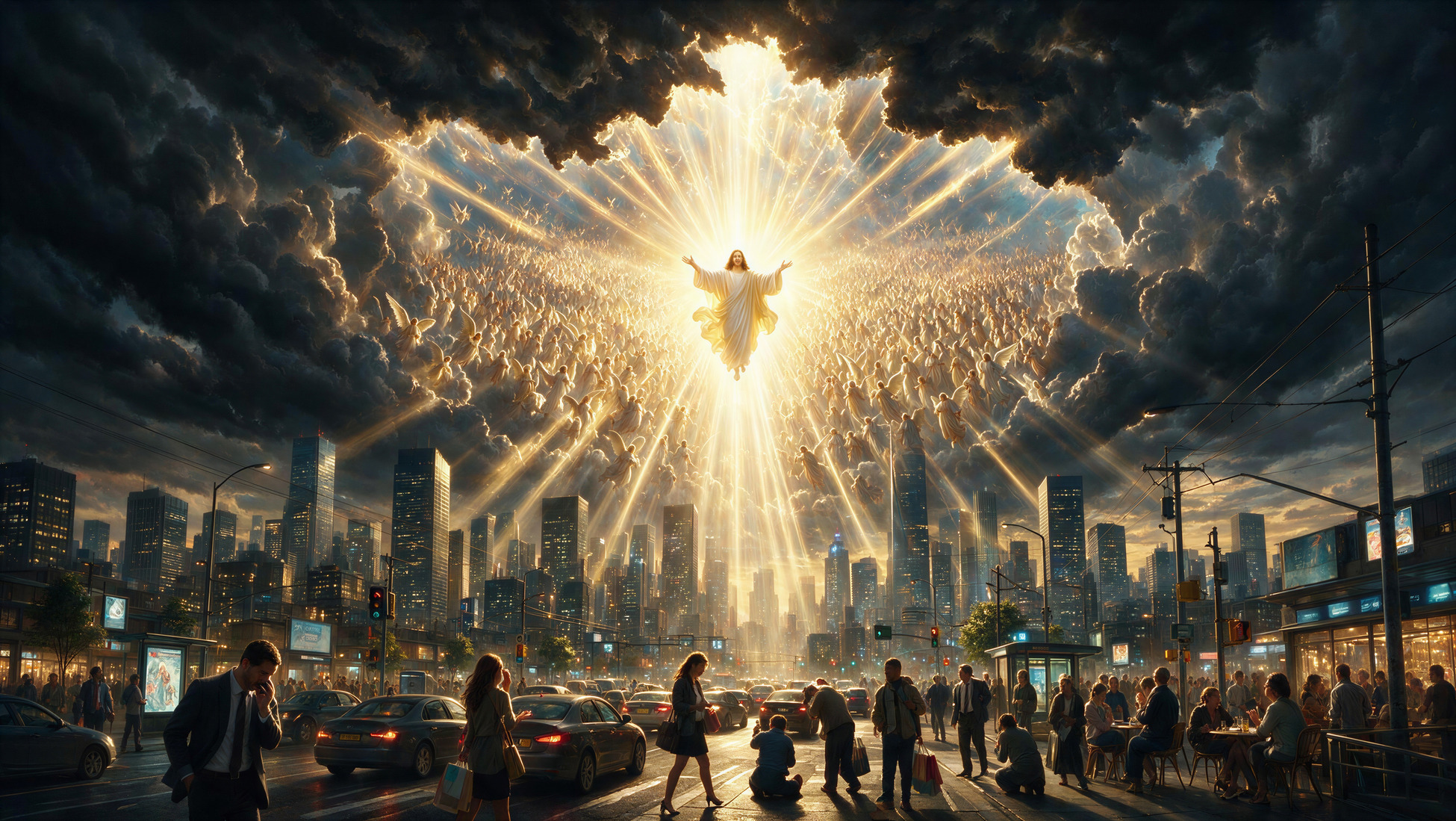
Just as the Burning Bush that Moses encountered in the wilderness blazed with divine fire yet was not consumed, so the signs and wonders surrounding Christ’s imminent return burn with supernatural urgency in our generation — radiant with prophetic meaning, yet the world passes by without comprehending. Scripture is unambiguous: Christ is coming again.
He promised it (John 14:3), the angels confirmed it at His ascension (Acts 1:11), and the entire prophetic tradition of both Testaments converges upon it.
He who testifies to these things says, “Yes, I am coming soon.” Amen. Come, Lord Jesus. (Revelation 22:20)
This verse is profoundly significant as the near-final word of the entire Bible. After sixty-six books spanning creation, fall, covenant, redemption, and prophecy, Scripture closes not with an argument but with a promise and a prayer: Christ’s assurance “I am coming soon,” answered by the Church’s longing cry, “Come, Lord Jesus.” It captures the posture of every believer across the ages — living in watchful hope, anchored not in this world’s systems but in the certain return of the King.
This chapter explores the biblical landscape of that return — its signs, its debates, its cosmic climax, its millennial aftermath — and calls the believer to watch, wait, and live expectantly.
The Scriptures do not leave us without warning. Across multiple prophetic registers — from the psalms to the minor prophets, from the Olivet Discourse to the Apocalypse — God has planted Burning Bushes along the road of history, signs that blaze with eschatological fire for those with eyes to see.
Jesus Himself catalogued these signs in Matthew 24, responding to His disciples’ question, “What will be the sign of your coming and of the end of the age?” He enumerated: wars and rumors of wars, nation rising against nation and kingdom against kingdom, famines, pestilences, and earthquakes in various places — and He called these “the beginning of birth pains” (Matthew 24:7–8). Birth pains are instructive: they do not merely signal pain, they signal imminent arrival.
Among the most dramatic of these cosmic Burning Bushes are the celestial disturbances foretold across Scripture. Joel 2:30–31 declares: “I will show wonders in the heavens and on the earth, blood and fire and billows of smoke. The sun will be turned to darkness and the moon to blood before the coming of the great and dreadful day of the LORD.” This passage — quoted by Peter at Pentecost and echoed in Revelation 6:12–13 — describes a sequence of cosmic upheaval that will serve as God’s own dramatic announcement of the end. We expect the frequency and intensity of earthquakes, tsunamis, volcanic activity, and extreme weather events to increase as the end draws near, representing one of the most striking convergences of Matthew 24 signs.
Luke 21:25–26 adds another dimension: “There will be signs in the sun, moon and stars. On the earth, nations will be in anguish and perplexity at the roaring and tossing of the sea. People will faint from terror, apprehensive of what is coming on the world, for the heavenly bodies will be shaken.” The phrase “anguish and perplexity” is remarkable. The Greek word for perplexity (aporia) carries the sense of having no way out — no exit strategy, no solution. The existential anxiety driving modern geopolitics — the Doomsday Clock set at eighty-five seconds to midnight in January 2026, the threat of nuclear confrontation, the unraveling of the post-World War II global order — is itself a prophetic Burning Bush.
The Book of Daniel contributes to this picture with its vision of the end: “But you, Daniel, roll up and seal the words of the scroll until the time of the end. Many will go here and there to increase knowledge” (Daniel 12:4).
We live in the era of exponential knowledge increase.
The volume of published science now doubles roughly every seventeen years, and the doubling time of medical knowledge has plummeted from fifty years in 1950 to a staggering three and a half years by 2010. What we are witnessing today through the rise of the internet, artificial intelligence, and quantum computing is not merely human progress—it is the literal, accelerating fulfillment of Danielic prophecy. No previous generation in human history could claim what we see now: a world consuming information at a pace that demands our spiritual awakening.
Furthermore, moral and societal signs, as covered in Volume III, are Burning Bushes in their own right. The apostasy — the great falling away — is one of the most sobering: “The Spirit clearly says that in later times some will abandon the faith and follow deceiving spirits and things taught by demons.” (1 Timothy 4:1) The pattern of prominent Christian leaders publicly renouncing their faith, the erosion of biblical morality within mainline denominations, and the rise of a therapeutic, man-centered pseudo-gospel all fulfill Paul’s warning that “the time will come when people will not put up with sound doctrine” (2 Timothy 4:3). As in the days of Noah — when violence and moral corruption filled the earth (Genesis 6:11) — and as in the days of Lot, when Sodom’s sin had reached its zenith (Luke 17:28–29), our generation stands at a prophetic inflection point.
These Burning Bushes are given to build our faith, not to frighten us. Like Moses, the faithful must turn aside and examine them, for they are God’s signs to a Church that watches, prays, and waits with expectation.
Watch: The Imminent Return is Near! — Prophecy Watchers
The Rapture Debate: Pre-, Mid-, and Post-Tribulation Views
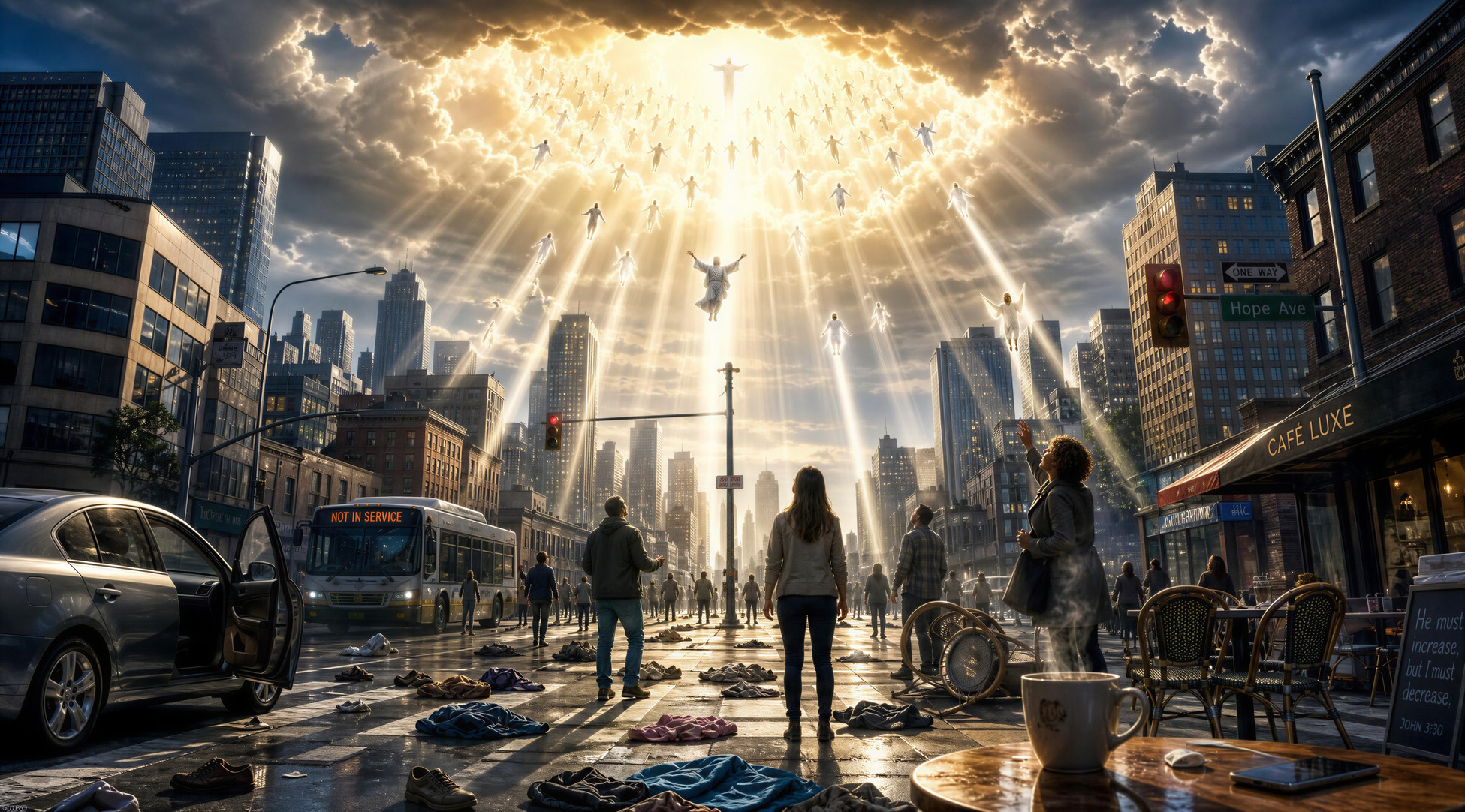
Few doctrinal questions generate more passionate discussion among evangelical Christians than the timing of the Rapture. Before exploring the positions, we must first affirm what is not in dispute: the Rapture itself is a clearly biblical teaching. Paul describes it with unmistakable clarity in 1 Thessalonians 4:16–17:
“For the Lord himself will come down from heaven, with a loud command, with the voice of the archangel and with the trumpet call of God, and the dead in Christ will rise first. After that, we who are still alive and are left will be caught up together with them in the clouds to meet the Lord in the air. And so we will be with the Lord forever.” (1 Thessalonians 4:16–17)
The Latin translation of the Greek word harpazō — “caught up” — gives us our English word Rapture. The disagreement among sincere, Bible-believing scholars concerns not whether the Rapture will occur, but when it occurs in relation to the Great Tribulation.
Pre-Tribulation Rapture
The pre-tribulation position holds that Christ will return secretly and suddenly to remove the Church before the seven-year Tribulation period begins. Its primary scriptural supports include: the promise of 1 Thessalonians 5:9 that “God did not appoint us to suffer wrath”; the Philadelphia church’s promise in Revelation 3:10 to be kept “from the hour of trial that is going to come on the whole world”; and the absence of the word “church” (ekklēsia) from Revelation 4 through 19, which pre-tribulationists take as evidence that the Church is no longer on earth during that period. Prominent advocates have included John Nelson Darby (its modern systematizer), C.I. Scofield, Hal Lindsey, Tim LaHaye, and John MacArthur.
Mid-Tribulation Rapture
Mid-tribulationists believe the Rapture occurs at the midpoint of the seven-year Tribulation — after 3.5 years — coinciding with the blowing of the seventh trumpet (Revelation 11:15) and the revelation of the Antichrist’s true nature. They anchor their view in Daniel’s identification of the “abomination that causes desolation” occurring at the midpoint (Daniel 9:27) and in Matthew 24:15–21, where Jesus warns that the worst persecution begins after the abomination. This position, embraced by scholars like Gleason Archer, attempts to honor both the Church’s preservation from divine wrath and her participation in the beginning stages of tribulation.
Post-Tribulation Rapture
The post-tribulation view holds that the Church will remain on earth throughout the entire Tribulation period and be “raptured” at the very end — essentially meeting Christ in the air and immediately returning with Him. Post-tribulationists argue that the Church has always experienced tribulation (John 16:33; Acts 14:22), that God’s holy people are clearly present during the Tribulation in Revelation 13:7, and that the pattern of Noah and Lot shows God protecting His people through judgment rather than removing them before it. Historic premillennialists such as George Eldon Ladd and Robert Gundry have championed this view.
Whatever position one holds, all three views converge on the same glorious truth: Christ is coming for His own, the Church will be glorified, and we shall ever be with the Lord. The Burning Bush of the Rapture debate is itself a sign — it reveals a Church actively studying, engaging, and expecting the return of her King.
Watch: Paul’s Proof for the Pretrib Rapture — Ken Johnson, Prophecy Watchers
Watch: Our Blessed Hope: The Rapture of the Church! — L. A. Marzulli
The Second Coming in Glory: Every Eye Will See Him
Whatever the precise sequence of eschatological events, Scripture speaks with one voice on the manner of Christ’s Second Coming: it will be visible, personal, glorious, and universal. This is not the quiet visit of a thief in the night to receive His own — it is the triumphant return of the King of Kings in blazing, inescapable glory.
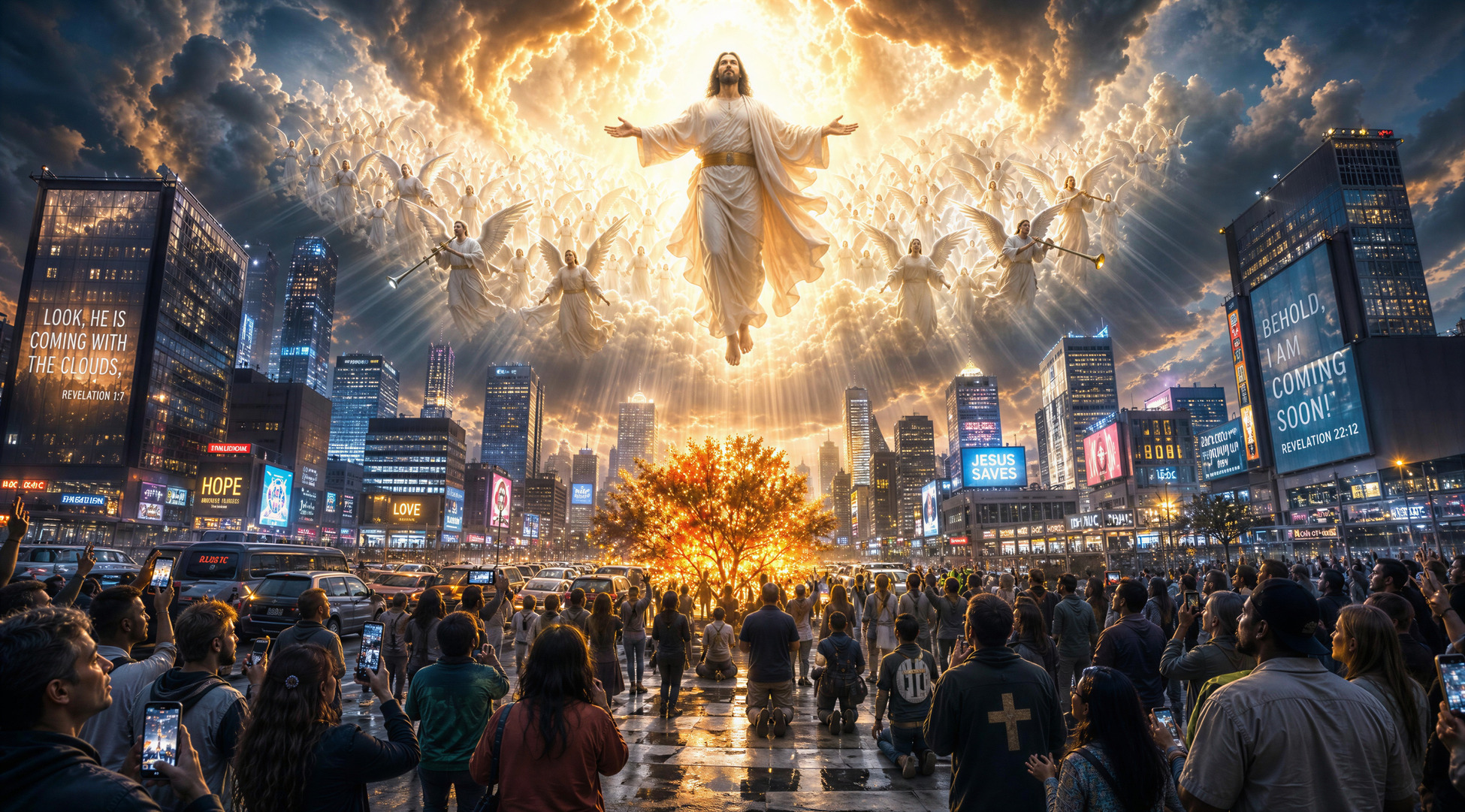
Revelation 1:7 captures the cosmic scale of this event: “Look, he is coming with the clouds, and every eye will see him, even those who pierced him; and all peoples on earth will mourn because of him.” The phrase “every eye will see him” is an extraordinary statement.
In John’s day, it was inconceivable that a single event could be witnessed simultaneously by the entire human population of the globe. In our age of satellite television, livestreaming, and AI-generated real-time global broadcast, this verse reads with fresh prophetic weight. The technology of universal visibility now exists.
Daniel 7:13–14 presents the most majestic Old Testament vision of this coming: “In my vision at night I looked, and there before me was one like a son of man, coming with the clouds of heaven. He approached the Ancient of Days and was led into his presence. He was given authority, glory and sovereign power; all nations and peoples of every language worshiped him.” Jesus applied this passage to Himself before the Sanhedrin (Matthew 26:64), and it forms the backbone of the Olivet Discourse’s climax in Matthew 24:30: “Then will appear the sign of the Son of Man in heaven. And then all the peoples of the earth will mourn when they see the Son of Man coming on the clouds of heaven, with power and great glory.”
Zechariah 14:4 adds a stunning geographic detail: “On that day his feet will stand on the Mount of Olives, east of Jerusalem.” The same mountain from which Jesus ascended (Acts 1:9–12) — and where the angels promised He would return “in the same way you have seen him go into heaven” — will receive His feet again. This is not metaphor; it is prophetic geography. The Mount of Olives is a real place, and geologists have identified earthquake and landslide risk on its slopes, which lends credence to the verse’s continuation: “and the Mount of Olives will be split in two from east to west, forming a great valley.” (Zechariah 14:4)
Paul describes the cosmic drama accompanying His return: “For the Lord himself will come down from heaven, with a loud command, with the voice of the archangel and with the trumpet call of God” (1 Thessalonians 4:16). The shout, the archangel’s voice, the trumpet — these are instruments of royal announcement, the fanfare of heaven’s greatest King. The Second Coming will not sneak into history; it will shatter history’s complacency with the thunderclap of divine arrival.
Importantly, this return is not merely a rescue operation — it is a royal coronation in real time. The returning Christ is not the suffering Servant of Isaiah 53; He is the Conquering King of Isaiah 63, riding through history with garments stained red, not from His own blood, but from the blood of His enemies (Revelation 19:13). The First Coming was the Lamb; the Second Coming is the Lion.
Watch: The Imminent Return of Christ with Jonathan Brentner — SkyWatchTV
Armageddon and the Battle of the Ages
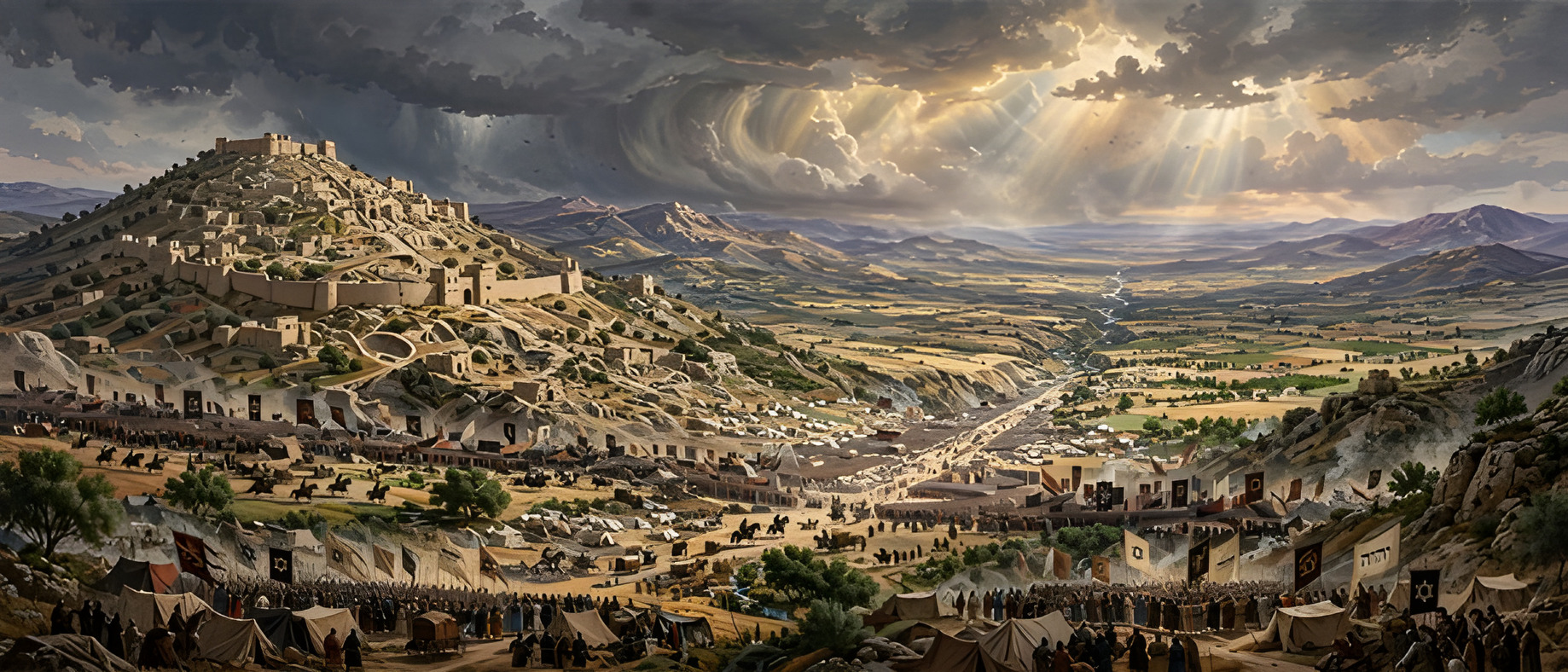
The Battle of Armageddon stands as the prophetic focal point of human military history — the moment where the wars of nations converge into one final supernatural conflict, and where the kingdoms of this world meet the Kingdom that cannot be shaken.
The name comes from the Hebrew Har-Magedon (“mountain of Megiddo”): “Then they gathered the kings together to the place that in Hebrew is called Armageddon.” (Revelation 16:16) The site is Tel Megiddo, overlooking the Jezreel Valley in northern Israel about 18 miles southeast of Haifa. The broad plain it commands has hosted decisive battles from Thutmose III in 1457 BC onward, and it is here, according to Revelation 16 and Zechariah 12–14, that the nations gather for their final assault on Jerusalem — only to meet not the armies of Israel, but the returning Lord Himself.
Zechariah frames the scene: God will make Jerusalem “a cup that sends all the surrounding peoples reeling” and “an immovable rock for all the nations.” (Zechariah 12:2–3) The present geopolitical obsession with Jerusalem — contested at the United Nations and claimed by multiple religions — is itself a striking echo of this two-and-a-half-millennia-old prophecy.
The technological dimension is equally arresting. Ezekiel describes the Gog–Magog invasion in the vocabulary of his own day — horses, bows and arrows, shields, and swords (Ezekiel 38:4; 39:9) — which futurist interpreters read as a sixth-century BC prophet’s rendering of modern warfare. John’s army of two hundred million (Revelation 9:16), impossible in any earlier generation, is conceivable today. And Revelation foresees the Euphrates dried up “to prepare the way for the kings from the East” (Revelation 16:12) — a river whose flow has in fact fallen dramatically in our generation through dam construction and drought.
Yet the decisive weapon at Armageddon is not human. “Coming out of his mouth is a sharp sword with which to strike down the nations.” (Revelation 19:15) The lawless one is overthrown “with the breath of his mouth” and destroyed “by the splendor of his coming.” (2 Thessalonians 2:8) Armageddon is not ultimately a human battle. It is the Burning Bush of divine intervention — blazing with holy fire, consuming the enemies of God, yet leaving His redeemed unharmed.
The Converging Blocs
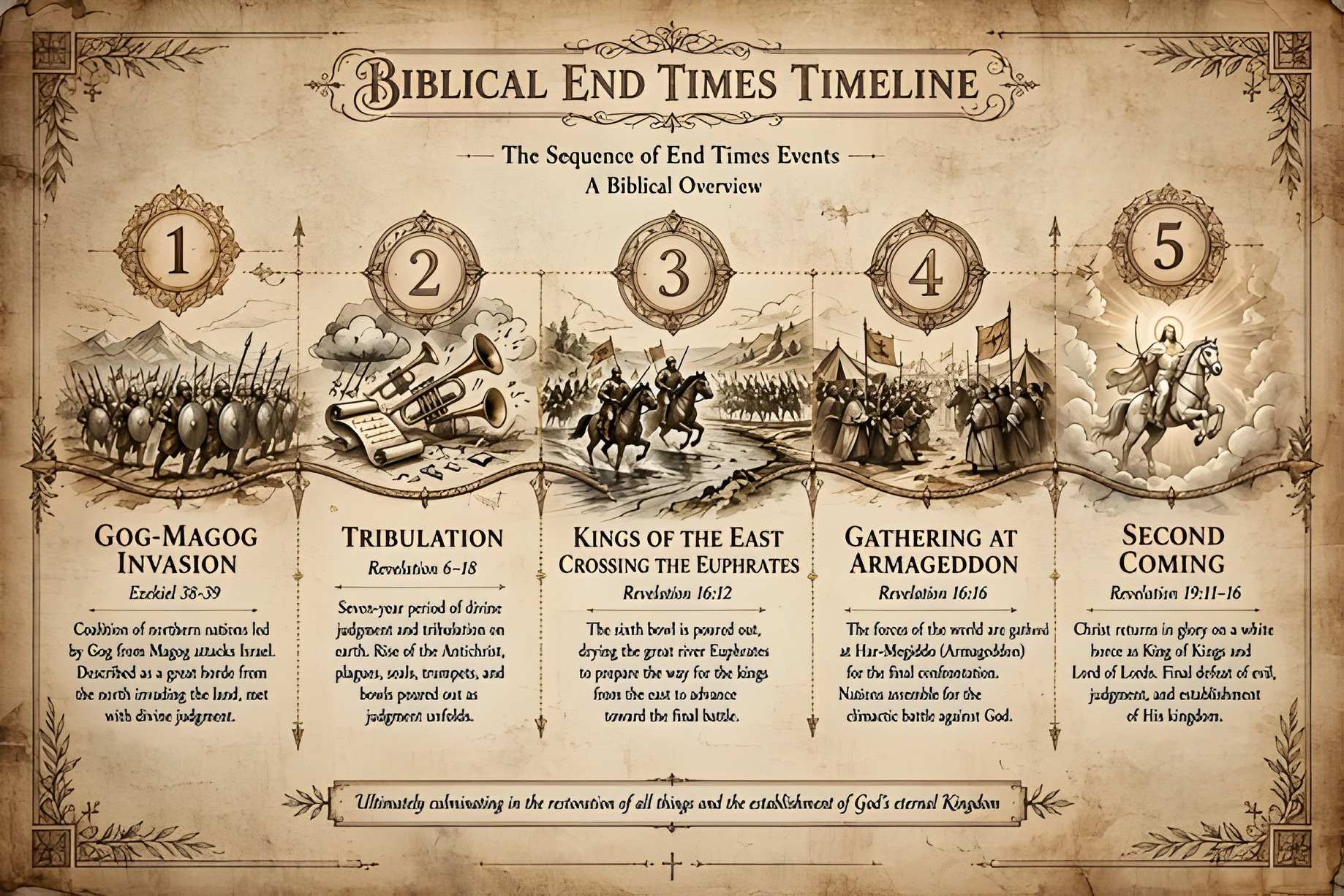
In dispensational premillennialism, Armageddon is not a single skirmish but the climax of a campaign spanning the seven-year Tribulation: the Gog–Magog invasion (Ezekiel 38–39), the Tribulation judgments (Revelation 6–18), the kings of the East crossing the dried Euphrates (Revelation 16:12), the gathering at Armageddon (Revelation 16:16), and the Second Coming (Revelation 19:11–16).
Dispensational writers such as J. Dwight Pentecost, John Walvoord, Charles Ryrie, and Mark Hitchcock describe four converging forces. From the north comes the coalition of Gog — Magog, Rosh, Meshech, Tubal, Gomer, and Beth-Togarmah, joined by Persia, Cush, and Put (Ezekiel 38:1–6) — identified with Russia, Turkey, Central Asia, Iran, Sudan, and Libya. From the west comes the revived Roman Empire of the Beast and his ten kings (Revelation 17:12–13; Daniel 9:26–27). From the east come the “kings from the east” beyond the Euphrates (Revelation 16:12), understood as the great Asian powers. From the south comes the King of the South (Daniel 11:40) — Egypt with an African–Arab coalition. This four-direction scheme is a synthesis: Daniel 11:40–45 explicitly names only the kings of the South and North, while the eastern bloc is drawn from Revelation 16 and the western bloc from Revelation 17.
The northern roster is the fullest. The NET Bible’s translators’ note on Ezekiel 38:6 observes:
The seven-nation coalition represents the north (Meshech, Tubal, Gomer, Beth-Togarmah), the south/west (Ethiopia, Put) and the east (Persia). The use of the sevenfold list suggests completeness.
Scholarship identifies Meshech, Tubal, Gomer, and Beth-Togarmah with peoples of ancient Anatolia — the Mushki, Tabal, Cimmerians, and Til-Garimmu of Assyrian records, all within modern Turkey — while Josephus identifies Magog’s descendants with the Scythians and Gomer’s with the Galatians.
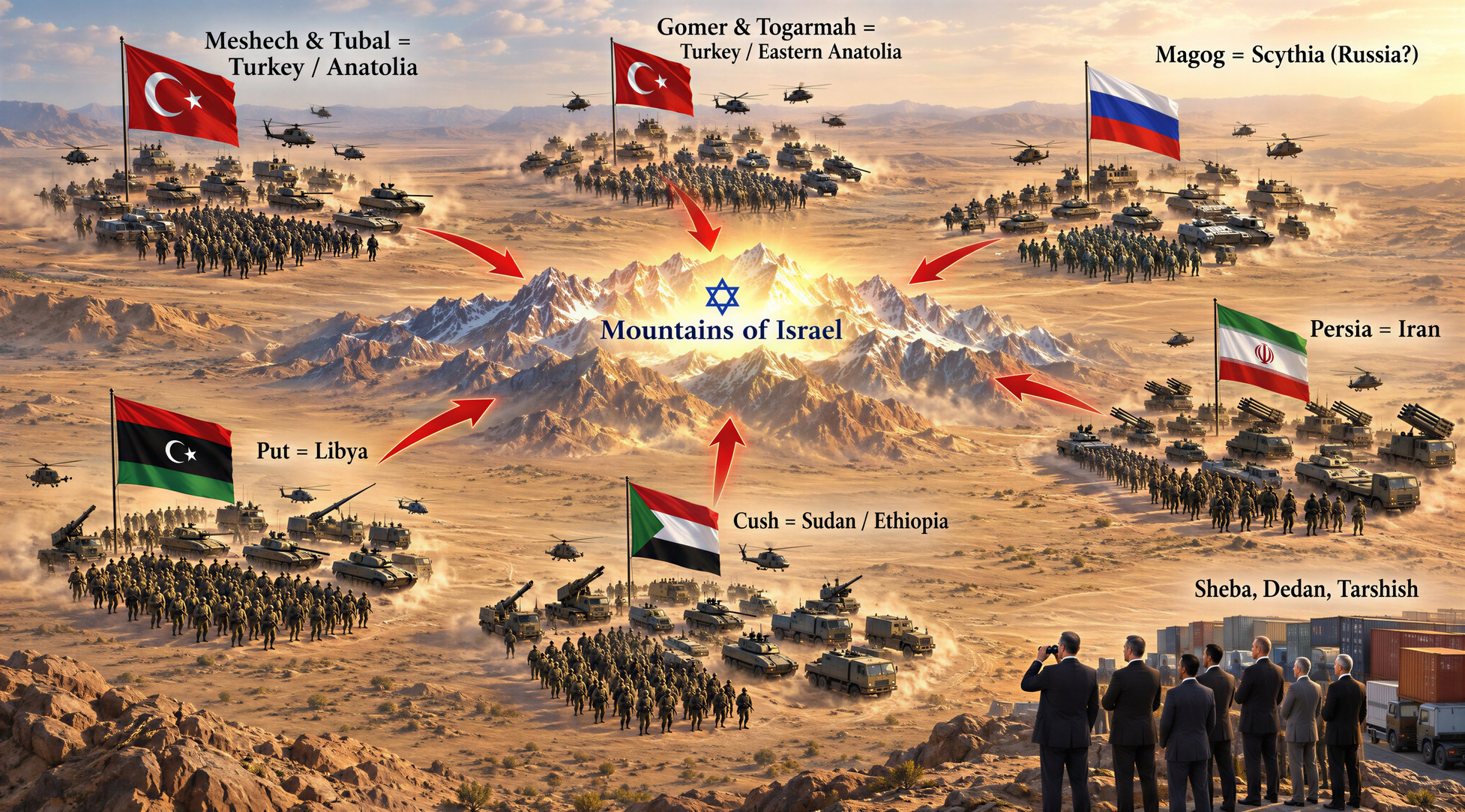
Dispensational premillennial writers (see “The Millennial Reign” below) outline the campaign in five phases. First, the sixth bowl dries the Euphrates for the kings of the East (Revelation 16:12). Second, three unclean spirits from the dragon, the beast, and the false prophet gather “the kings of the whole world” to Armageddon (Revelation 16:13–16). Third, the fighting sweeps south from the Jezreel Valley to the Valley of Jehoshaphat (Joel 3:2) and on toward Edom and Bozrah (Isaiah 63:1). Fourth comes the siege of Jerusalem: the city is taken, houses plundered, and half its people exiled (Zechariah 14:2). Fifth, Christ returns to the Mount of Olives, which splits beneath His feet (Zechariah 14:3–4); the beast and the false prophet are cast into the lake of fire, and the birds are summoned to the carnage (Revelation 19:17–21).
Watch: What Happens During the Mysterious 75 Days After the Tribulation? (Daniel 12:11–13) — Matt Freeman, Prophecy Watchers
The Gog–Magog Invasion: Dr. Andy Woods on Ezekiel 38–39
In a conference lecture on Ezekiel 38–39, Dr. Andy Woods — senior pastor of Sugar Land Bible Church and author of The Middle East Meltdown: The Coming Islamic Invasion of Israel — works through the prophecy by asking the journalist’s questions: who, when, why, what, how, and so what.
Context. Ezekiel 33–48 concerns Israel’s end-time restoration, and chapters 36–37 describe it as a two-stage regathering: first the body — political rebirth in the land: “For I will take you out of the nations; I will gather you from all the countries and bring you back into your own land.” (Ezekiel 36:24) — and only afterward the breath (ruach), the Spirit poured out on the nation (Ezekiel 36:25–27; 37:8–10). Woods argues we live between the two regatherings: the political one began in 1948; the spiritual one awaits the Tribulation. The Gog–Magog invasion, he contends, is the very instrument God will use to drive His regathered but still unbelieving nation to faith.
Who. Using the Table of Nations (Genesis 10) and ancient witnesses such as Josephus and Herodotus, Woods identifies the invaders of Ezekiel 38:1–6: Magog as the Scythian lands of Central Asia; Rosh as Russia; Meshech, Tubal, Gomer, and Togarmah as Turkey; Persia as Iran; Cush as Sudan; and Put as Libya. For Rosh he leans on the nineteenth-century lexicographer Wilhelm Gesenius, who called Rosh
a northern nation, mentioned with Tubal and Meshech; undoubtedly the Russians.
When. Because the invasion falls in the day of God’s fury and wrath (Ezekiel 38:18–19) yet strikes an Israel dwelling safely (batach, Ezekiel 38:8) and at rest (shaqat, Ezekiel 38:11), Woods places chapter 38 just after the Antichrist’s covenant with Israel (Daniel 9:27) — early in the Tribulation, at the second seal, when counterfeit peace gives way to war (Revelation 6:1–4). Chapter 39, however, with its birds of prey gorging on the fallen (Ezekiel 39:4, 17–20; compare Revelation 19:17–18) and the wholesale conversion of Israel (Ezekiel 39:22, 29), points to the Tribulation’s end. Following Harold Hoehner, Woods therefore holds a two-phase view: chapters 38 and 39 bracket the Tribulation rather than describing one simultaneous event.
Why. Two motives converge. Behind the scenes lies the angelic conflict: the “evil plan” that comes into the invaders’ minds (Ezekiel 38:10) is, for Woods, Satan’s latest attempt to destroy the nation through which the promised kingdom must come (Genesis 12:3; Revelation 12:13–17). On the surface lies plunder: the nations come to take spoil — livestock, goods, silver and gold (Ezekiel 38:12–13).
What. The outcome is divine annihilation. God turns the invaders’ swords against one another and shakes the land with a great earthquake (Ezekiel 38:19–22); Israel receives help from no nation, so God alone receives the glory. The dead are buried for seven months (Ezekiel 39:12) and the weapons burned for seven years (Ezekiel 39:9) — a burning Woods allows to continue into the millennial kingdom, since the millennium is a renovated earth, not yet the sinless new creation. The end product is the salvation of national Israel: “I will no longer hide my face from them, for I will pour out my Spirit on the people of Israel.” (Ezekiel 39:29)
How. Woods sees the stage being set through three trends. First, Israel’s regathering in unbelief: statehood in 1948 and, since 1967, possession of the “mountains of Israel” on which the invaders must fall (Ezekiel 39:2, 4). He contrasts today’s prosperous Israel with the desolation Mark Twain recorded after his 1867 visit in The Innocents Abroad:
A desolate country whose soil is rich enough, but is given over wholly to weeds — a silent mournful expanse … We never saw a human being on the whole route.
Israel’s new wealth — Dead Sea minerals, offshore natural gas, oil exploration — supplies the very plunder motive Ezekiel names; Woods even speculates (a conjecture, not an established find) that Solomon’s vanished gold lies hidden in the land awaiting discovery. Second, the alignment of the nations: an expansionist Russia, post-1979 Iran, and an increasingly Islamist Turkey now cooperate openly, while the Abraham Accords explain, for the first time, why Sheba, Dedan, and the merchants of Tarshish would protest rather than join — they profit from peace with Israel. Third, the wars of 1948, 1967, and 1973 read like dress rehearsals: Israel attacked against overwhelming odds, yet surviving.
So what. Woods closes with application: prophecy converging on fulfillment is proof of divine inspiration and a ground of calm rather than fear; God’s faithfulness to a rebellious Israel guarantees His faithfulness to us: “If we are faithless, he remains faithful, for he cannot disown himself.” (2 Timothy 2:13) And Israel remains the world’s prophetic timepiece, as William Blackstone wrote in Jesus Is Coming:
Israel. God’s sun-dial. If we want to know our place in chronology, our position in the march of events, look at Israel.
If the stage is being set this aggressively for the Tribulation, Woods reminds his hearers, then the Rapture that precedes it is nearer still — so live as though today could be the day.
The next section expands upon the Millennial Reign of Christ.
Watch: The Prophecy of Gog & Magog, Ezekiel 38–39 — Dr. Andy Woods (Duluth Bible Church)
Watch: Is the Gog and Magog War Next? Ezekiel 38 Explained — Lee Brainard, Prophecy Watchers
The Millennial Reign: Christ’s Literal Kingdom on Earth

Following the Second Coming and the defeat of the Antichrist’s coalition, Scripture presents one of the most debated — and most glorious — doctrines in all of Christian eschatology: the Millennial Reign of Christ. Revelation 20:1–6 is the primary text:
And I saw an angel coming down out of heaven, having the key to the Abyss and holding in his hand a great chain. He seized the dragon, that ancient serpent, who is the devil, or Satan, and bound him for a thousand years. He threw him into the Abyss, and locked and sealed it over him, to keep him from deceiving the nations anymore until the thousand years were ended. After that, he must be set free for a short time. I saw thrones on which were seated those who had been given authority to judge… They came to life and reigned with Christ a thousand years. (Revelation 20:1–4)
Will there be a thousand years of reign by our Lord Jesus Christ? It is not clear why this reign is necessary, since Satan is released at the end of it and there is a final showdown after that, before the final victory and the establishment of the New Heaven and New Earth. This has always perplexed me. Why the thousand-year reign? Not that our Lord needs to explain anything, but it has always appeared to me to be unnecessary.
Not surprisingly, in the domain of prophecy and the interpretation of the book of Revelation, three major interpretive positions have been held by serious, Bible-believing Christians across the centuries.
Amillennialism
Championed by Augustine — who moved from an early premillennial view to a symbolic interpretation — and embraced by Luther, Calvin, and much of the Reformed tradition (including modern scholars such as J.I. Packer and Anthony Hoekema), amillennialism holds that the “thousand years” of Revelation 20:1–6 is symbolic, representing the current age between Christ’s first and second advents. Christ reigns now — spiritually — in the hearts of believers and through His Church. The binding of Satan refers to his being restrained from deceiving the nations so as to prevent the spread of the gospel to all peoples. The first resurrection is understood as spiritual regeneration. In this view, Christ returns at the end of history to a final resurrection and judgment without an intervening literal millennium.
Postmillennialism
Postmillennialism, held by figures such as Jonathan Edwards, B.B. Warfield, and Charles Hodge, teaches that through the preaching of the gospel and the advance of Christ’s kingdom, the world will be progressively Christianized until a prolonged golden age — the millennium — is achieved on earth, after which Christ returns. The Church’s Great Commission is not merely to survive but to disciple nations. In this optimistic eschatology, the Church will have such transformative cultural influence that a vast majority of the world will submit to Christ before His return.
Premillennialism
Premillennialism — the position that Christ returns before the millennium and establishes a literal thousand-year kingdom on earth — was a prevalent view among many early Church fathers (Papias, Justin Martyr, Irenaeus, Lactantius) and has been embraced by modern dispensationalists (John Nelson Darby, Hal Lindsey, John MacArthur, Tim LaHaye) and historic premillennialists (George Eldon Ladd and Robert Gundry).
In the classic dispensational variant, the pretribulational Rapture precedes a seven-year Tribulation; in the historic variant, the Church passes through the Tribulation and is raptured at Christ’s return. Both agree that Christ will reign literally on earth from Jerusalem for a thousand years, fulfilling the Davidic covenant promises (2 Samuel 7:12–16; Isaiah 11:1–10; Zechariah 14:9).
Even though I have my questions and reservations on the millennial reign, I do find merit in a futurist, premillennial framework — not out of theological stubbornness, but because the literal fulfillment of so many Old Testament prophecies about Israel (her regathering, the restoration of Jerusalem, the 1948 rebirth of the nation) strongly suggests that the remaining Davidic promises will also be fulfilled literally. As the prophet declares:
Of the increase of His government and peace there will be no end, upon the throne of David and over His kingdom, to order it and establish it with judgment and justice from that time forward, even forever. (Isaiah 9:7 NKJV)
This is a Burning Bush that cannot be spiritualized away.
Watch: The Coming Millennial Kingdom — Nathan Jones, Prophecy Watchers
Christ’s Return Recommendations: Watching, Waiting, and Living Expectantly
The final promise — and the final prayer — of the book of Revelation concern His return: “He who testifies to these things says, ‘Yes, I am coming soon.’ Amen. Come, Lord Jesus.” (Revelation 22:20)
So the hope, the watching, and the waiting are fundamental recommendations, as expanded upon in the following sections. Since we live in the 21st century — and He may well return within it — here are the recommendations.
Pay Attention to the 21st Century Technological Advances
One of the most striking features of our era is the convergence of ancient biblical prophecies with the specific capabilities of twenty-first century technology — a convergence so precise that it constitutes its own category of prophetic sign.
Consider the mark of the Beast. Revelation 13:16–17 describes a system in which people “could not buy or sell unless they had the mark, which is the name of the beast or the number of its name.” For nineteen centuries, this passage was interpreted metaphorically or dismissed as impossible to implement literally. In our generation, we have biometric identification, RFID microchips, digital currency systems, social credit scores (already operational in China), and AI-driven surveillance infrastructure capable of implementing precisely such a universal economic control system. The technology for a global “no mark, no commerce” system not only exists — it is already partially deployed.
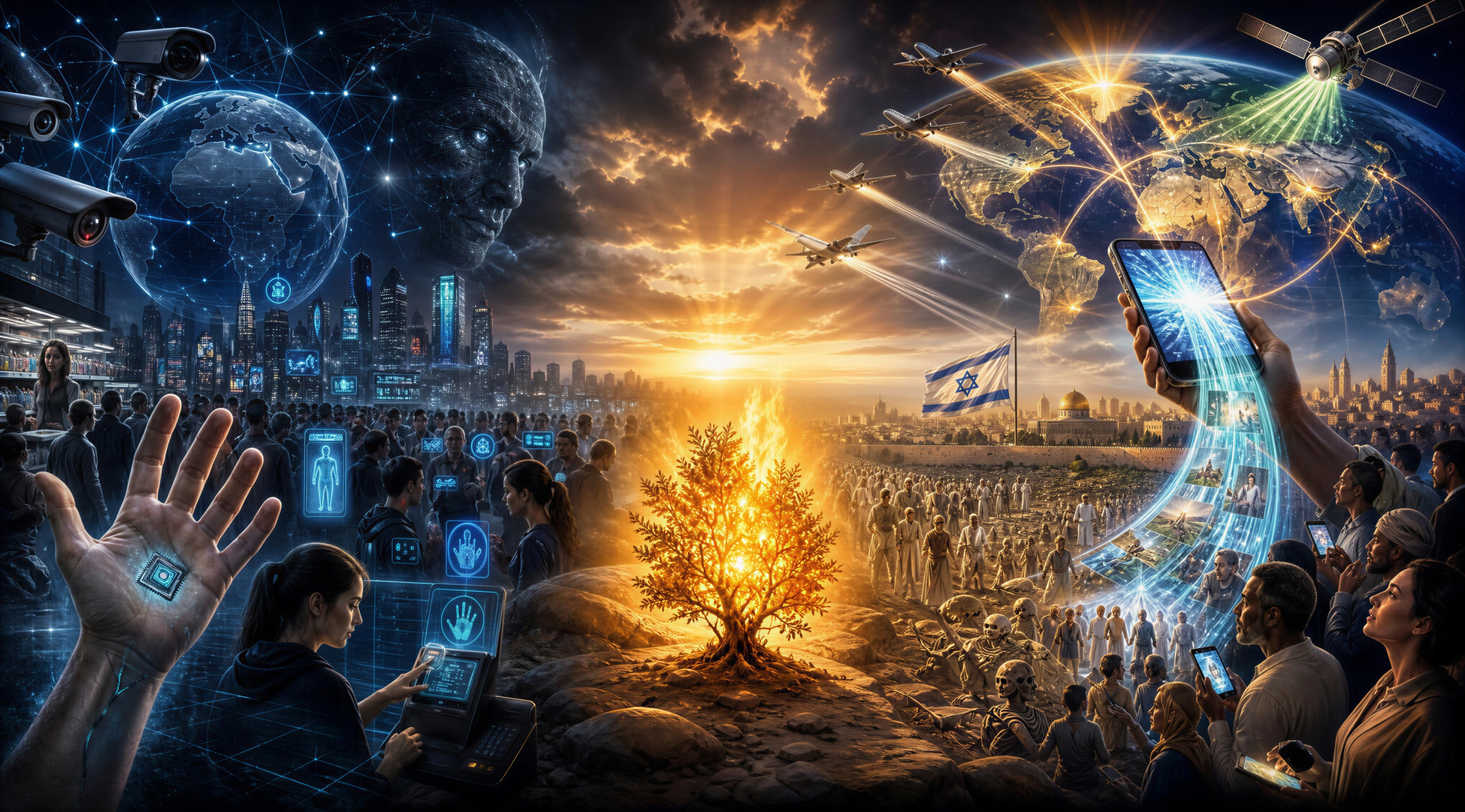
Daniel 12:4 foretold that at the time of the end, “Many will go here and there to increase knowledge.” Global air travel carries five billion passengers annually. Human knowledge is increasing at an accelerating pace: as noted in an earlier section, the volume of published science now doubles roughly every seventeen years, and medical knowledge doubles far faster. Artificial intelligence and quantum computing promise to accelerate that increase even further.
The regathering of Israel is perhaps the most incontrovertible prophetic fulfillment of our era. Ezekiel 37’s vision of the valley of dry bones — scattered Israel coming together bone to bone, sinew to sinew, flesh to flesh — was fulfilled before the world’s eyes in 1948, when the State of Israel was reborn after nearly two thousand years of dispersion. Ezekiel 36:24 had promised: “I will take you out of the nations; I will gather you from all the countries and bring you back into your own land.” No other nation in history has been scattered among the nations for millennia and then reconstituted in its ancestral homeland, speaking its ancestral language. This is not coincidence — it is covenant fulfillment.
The globalization of communications — the internet, satellite television, social media — means that for the first time in history, the gospel can genuinely be preached to “every nation, tribe, language and people” (Revelation 14:6) simultaneously. Jesus stated that “this gospel of the kingdom will be preached in the whole world as a testimony to all nations, and then the end will come” (Matthew 24:14). Bible translation organizations report that the number of language groups with no Scripture access is declining annually.
We are approaching a historic moment of global gospel saturation — the final Burning Bush before the dawn.
These technological Burning Bushes are examined in depth in 21st Century Burning Bushes: Volume II — Science and Technology, which explores quantum mechanics, artificial intelligence and digital transformation, transhumanism, Web3 and cryptocurrencies, and technology doomsday scenarios. Volume II argues that “recent discoveries in physics, cosmology, biology, and DNA actually provide compelling evidence for intelligent design and a Creator,” even as technologies like CRISPR gene editing and brain-computer interfaces “echo humanity’s ancient temptation to ‘become like gods.’” The same technologies that reveal the Creator’s genius are being weaponized toward the very control systems prophecy foretold — which is precisely why they must be watched.
I have always appreciated the statistic that about 27% of the Bible is prophecy, yet only about a quarter of pastors speak to their congregations about end-times prophecy at least once a month, and 3% never do!
Most Christians and churches prefer comfortable, practical topics. I have been blessed with many of these teachings over the years. However, especially as we see the Burning Bushes of the End Times become more pronounced, we need to be very vigilant.
Watch: Are the Systems of Revelation 13 Already Taking Shape? — SkyWatchTV
Watch: Tim Alberino: The Coming Posthuman Apocalypse — Prophecy Watchers
End-Times Burning Bushes: Be Prepared
In addition to the technological Burning Bushes, there are cultural, societal, and moral Burning Bushes that are precursors — and we need to watch these also. These are the subject of 21st Century Burning Bushes: Volume III — Culture, Society and Morality, which confronts the trends “shaking what it means to be a Christian — even what it means to be human — in modern society”: Woke ideology and cancel culture, moral decadence echoing the days of Noah — “where knowledge increases while morality paradoxically declines” — the persecution and genocide of Christians in Nigeria and the Congo, the New Age deception, and Secret Societies advancing the agenda of a One World Order.
Scripture anticipated this moral climate precisely. Paul warned Timothy that it would itself be a sign of the last days: “But mark this: There will be terrible times in the last days. People will be lovers of themselves, lovers of money, boastful, proud, abusive, disobedient to their parents, ungrateful, unholy” (2 Timothy 3:1–2) — a catalog that culminates in people “having a form of godliness but denying its power” (2 Timothy 3:5). This reads less like a first-century letter and more like a diagnosis of our own culture: the cult of self, the worship of wealth and celebrity, the breakdown of the family, and a religiosity that keeps the vocabulary of faith while emptying it of its substance.
Jesus Himself connected moral collapse to the end: “Because of the increase of wickedness, the love of most will grow cold” (Matthew 24:12). He compared the last days to the days of Noah and the days of Lot (Luke 17:26–30) — generations absorbed in ordinary life, eating and drinking, buying and selling, marrying and building, while corruption rose around them, until judgment fell suddenly. Peter added that mockery itself would be a sign, foretelling scoffers “scoffing and following their own evil desires,” who will say, “Where is this ‘coming’ he promised?” (2 Peter 3:3–4). When a culture normalizes what Scripture calls sin, ridicules the very idea of Christ’s return, and grows cold in love, these are not random social trends — they are Burning Bushes, blazing in plain sight for those with eyes to see.
Furthermore, the Olivet Discourse, covered in an earlier chapter, provides several end-times signs that also need to be watched. Jesus told His disciples: “You will hear of wars and rumors of wars, but see to it that you are not alarmed. Such things must happen, but the end is still to come. Nation will rise against nation, and kingdom against kingdom. There will be famines and earthquakes in various places. All these are the beginning of birth pains” (Matthew 24:6–8). Luke’s account adds “fearful events and great signs from heaven” (Luke 21:11) and “nations will be in anguish and perplexity” (Luke 21:25). Every generation has known wars, earthquakes, and plagues — but the phrase “the beginning of birth pains” is precise, and birth pains are defined by their increasing frequency and intensity as delivery approaches. That is precisely the pattern we are to watch for: not the mere existence of these signs, but their convergence and acceleration — global wars within a single century, pestilences that circle the planet in weeks (as our own generation witnessed in the COVID-19 pandemic), and famines and disasters broadcast to every screen on earth in real time.
Yet Jesus attached a command to these signs: “See to it that you are not alarmed. Such things must happen, but the end is still to come” (Matthew 24:6). The signs of the Olivet Discourse are given to produce watchfulness, not panic — sober discernment, not date-setting. They are contractions announcing that delivery is coming, on God’s schedule; and the proper response is the one Jesus Himself prescribed: “When these things begin to take place, stand up and lift up your heads, because your redemption is drawing near” (Luke 21:28).
The doctrine of Christ’s return is not merely academic — it is deeply practical and profoundly transformative. The New Testament does not present eschatology as a detached intellectual exercise but as the most powerful motivation for holy living, faithful service, and fearless witness. It gave the early disciples hope.
Jesus’ own instruction was simple and clear: “Therefore keep watch, because you do not know the day or the hour” (Matthew 25:13).
What does “watch” mean?
“Watch” here means staying spiritually alert and prepared, living in continual readiness for Christ’s return rather than being caught off guard by spiritual carelessness or complacency. It also means studying, discussing, and analyzing the End-Times Burning Bushes. The signs are difficult and complex. Yet they are extremely important for our spiritual lives and witness.
The parable of the ten virgins — five wise, five foolish (Matthew 25:1–13) — is a parable of readiness. The oil in the lamps represents the living relationship with the Holy Spirit that no one can borrow at the last moment. Readiness for Christ’s return is not a posture of passive waiting but of active, Spirit-filled engagement.
Paul captures the paradox beautifully in Philippians 3:20–21: “But our citizenship is in heaven. And we eagerly await a Savior from there, the Lord Jesus Christ, who, by the power that enables him to bring everything under his control, will transform our lowly bodies so that they will be like his glorious body.” We are citizens of heaven, living as ambassadors on earth — fully engaged in the mission of God, yet always oriented toward home.
The apostle John draws the most direct connection between eschatology and ethics: “Dear friends, now we are children of God, and what we will be has not yet been made known. But we know that when Christ appears, we shall be like him, for we shall see him as he is. All who have this hope in him purify themselves, just as he is pure” (1 John 3:2–3). The hope of Christ’s return is a purifying hope — it clarifies priorities, burns away trivialities, and focuses the heart on what is eternal.
Practically, watching for Christ’s return means: staying in the Word, where the prophetic Burning Bushes are illuminated; staying in prayer, where the believer participates with Daniel in heavenly warfare; staying in community, “not giving up meeting together, as some are in the habit of doing, but encouraging one another—and all the more as you see the Day approaching” (Hebrews 10:25); staying in witness, knowing that every soul brought to Christ before His return is an eternal trophy of grace; and staying in hope, refusing to be overwhelmed by the darkness of the age, because “when these things begin to take place, stand up and lift up your heads, because your redemption is drawing near” (Luke 21:28).
Watch: The Rapture Is Closer Than You Think! — Gary Stearman & Billy Crone, Prophecy Watchers
Wait — Endure and Be Patient
Watching and waiting are not the same discipline.
Watching is alertness; waiting is endurance.
Scripture holds both together, but waiting carries its own weight — it is the posture of the soul under God’s timetable rather than our own.
What does “wait” mean?
To wait, biblically, is not passive idleness. It is active, confident endurance under God’s sovereign timing — trusting His schedule even when the prophetic Burning Bushes we have turned aside to watch move slowly, or when the wait itself becomes the test of faith.
Habakkuk received this instruction directly regarding a vision of the end: “For the revelation awaits an appointed time; it speaks of the end and will not prove false. Though it linger, wait for it; it will certainly come and will not delay” (Habakkuk 2:3). The delay is not denial. The appointed time is fixed in heaven even when it is hidden from us.
James ties this waiting to patient labor, not idleness: “Be patient, then, brothers and sisters, until the Lord’s coming. See how the farmer waits for the land to yield its valuable crop, patiently waiting for the autumn and spring rains” (James 5:7). The farmer does not manufacture the harvest. He works, and he waits, trusting the seasons God ordains.
Isaiah promises that waiting itself becomes the means of renewal: “Those who hope in the LORD will renew their strength. They will soar on wings like eagles; they will run and not grow weary, they will walk and not be faint” (Isaiah 40:31). Waiting is not wasted time — it is where strength is replenished for the race ahead.
Paul, describing creation’s groaning toward redemption, writes: “We ourselves, who have the firstfruits of the Spirit, groan inwardly as we wait eagerly for our adoption to sonship, the redemption of our bodies. For in this hope we were saved. But hope that is seen is no hope at all. Who hopes for what they already have? But if we hope for what we do not yet have, we wait for it patiently” (Romans 8:23–25). Waiting and hoping are inseparable — the unseen is precisely what makes the waiting an act of faith rather than sight.
The Burning Bush itself is instructive here — not as sentiment, but as pattern. The bush burned and was not consumed (Exodus 3:2). It did not rush to ash. It sustained its fire without being spent by it. Moses himself waited decades in Midian before that fire ever appeared to him, and even after it did, months passed before Pharaoh relented. The bush’s flame was constant; the unfolding of God’s plan around it was not instant. So too with the End-Times Burning Bushes we track: the signs burn continuously before us, but their fulfillment unfolds on God’s clock, not ours. Discernment without patience produces panic; patience without discernment produces sleep. Waiting holds both.
Practically, waiting for Christ’s return means: laboring like the farmer, not manufacturing outcomes but doing faithful work while the harvest ripens; enduring like Habakkuk, trusting an appointed time we cannot see; renewing strength through the Lord rather than through anxious striving; groaning honestly, as Paul did, without losing perseverance; and ending, as John did, not in resignation but in longing — “Come, Lord Jesus.”
The Burning Bush of Christ’s Return blazes at the horizon of history. It does not consume those who draw near — it illuminates them, warms them, and fills them with the voice of God: “Yes, I am coming soon.” And the proper response of the watching Church is the last prayer of Scripture: “Amen. Come, Lord Jesus.” (Revelation 22:20)